If you’ve ever hesitated between writing goose or geese, you’re not alone. English grammar can be confusing, especially when it comes to irregular plurals that don’t follow the usual “add -s” rule.
In this clear and friendly guide, you’ll learn the exact difference between goose vs geese, with meanings, examples, common mistakes, and simple tips to help you use them correctly every time.
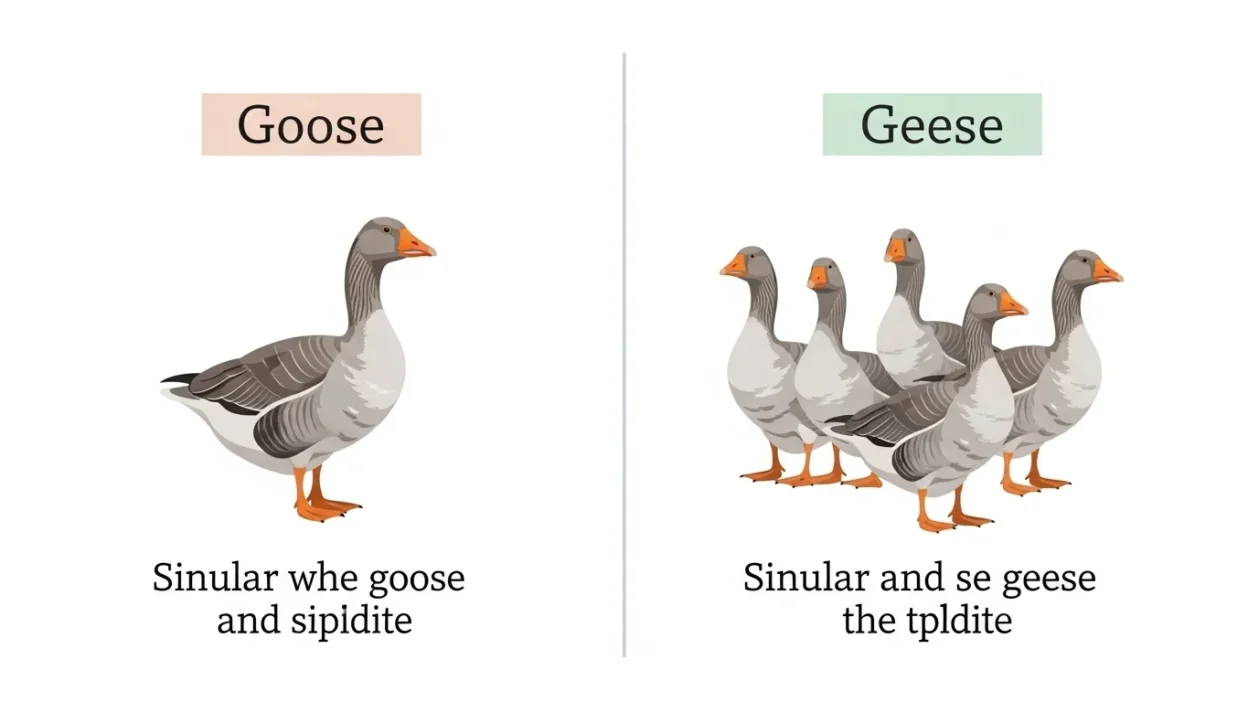
Quick Answer
- Goose = singular (one bird)
- Geese = plural (more than one bird)
👉 Example:
- A goose is walking near the pond.
- Several geese are flying in the sky.
What Is a Goose?


5
A goose is a single water bird with a long neck, webbed feet, and a loud honking sound. It belongs to the duck family and is often found near lakes, rivers, and farms.
Examples
- I saw a goose near the lake.
- The goose started honking loudly.
- A goose crossed the road.
What Are Geese?


7
Geese is the plural form of goose. It refers to more than one bird, usually seen in groups or flocks.
Examples
- The geese are flying south for winter.
- We saw many geese in the park.
- A group of geese crossed the road together.
Goose vs Geese: Key Differences
| Feature | Goose | Geese |
|---|---|---|
| Number | Singular (one) | Plural (more than one) |
| Meaning | One bird | Multiple birds |
| Usage | Individual | Group |
| Example | A goose is swimming | Many geese are swimming |
Why Is It “Geese” and Not “Gooses”?
English includes many irregular plural nouns, where the word changes form instead of adding “-s.”
- Goose → Geese
Similar Words
- Tooth → Teeth
- Foot → Feet
- Mouse → Mice
This pattern comes from older English language rules where vowel sounds changed in plural forms.
Easy Memory Trick
- Goose = one
- Geese = many
👉 Trick: “EE = WE (more than one)”
Common Mistakes to Avoid
❌ Using Goose for Plural
Wrong: I saw three goose.
Right: I saw three geese.
❌ Saying “Gooses”
Wrong: Many gooses are here.
Right: Many geese are here.
❌ Mixing Singular and Plural
Always match your noun with the correct number.
Goose in Idioms and Expressions
- Silly goose – a playful way to call someone foolish
- Golden goose – a valuable source of income
- Cook someone’s goose – to ruin someone’s plans
Example
- Don’t be such a silly goose!
American vs British English
There is no difference between American and British English for these words.
- Both use goose (singular)
- Both use geese (plural)
When to Use Goose vs Geese
Use “Goose” When:
- Talking about one bird
- Writing singular sentences
Use “Geese” When:
- Talking about more than one bird
- Referring to a flock
Real-Life Examples
- A goose is standing near the water.
- The geese are making noise.
- That goose looks aggressive.
- The geese are migrating for winter.
FAQs
1. Is “gooses” correct?
No, the correct plural is geese.
2. What is the plural of goose?
The plural is geese.
3. Why is goose irregular?
Because it follows an old vowel-change pattern in English.
4. Can I say “a flock of goose”?
No, say a flock of geese.
5. What is a baby goose called?
A baby goose is called a gosling.
6. Is goose used in expressions?
Yes, like “silly goose.”
7. Do US and UK English differ here?
No, both use the same forms.
Final Summary
Understanding goose vs geese is simple once you remember that goose is singular and geese is plural. Even though it’s an irregular noun, it follows a pattern similar to words like “tooth/teeth” and “foot/feet.”
Using the correct form makes your English clearer and more natural. Whether you’re writing an essay, blog, or caption, this small detail improves your grammar and confidence.

Born where forests whisper and rain writes stories on glass, Ethan Walker found meaning in silence. He writes not to impress but to express the quiet battles, unseen growth, and the beauty of becoming. His words are simple yet lasting, like echoes the heart refuses to forget.