If you’ve ever paused while writing and wondered whether to use sung or sang, you’re not alone. These two forms come from the same verb—sing but they’re used in different grammatical situations.
In this clear, human-friendly guide, you’ll learn the exact difference between sung vs sang, when to use each, real examples, common mistakes, and a simple trick to remember forever.
Quick Answer
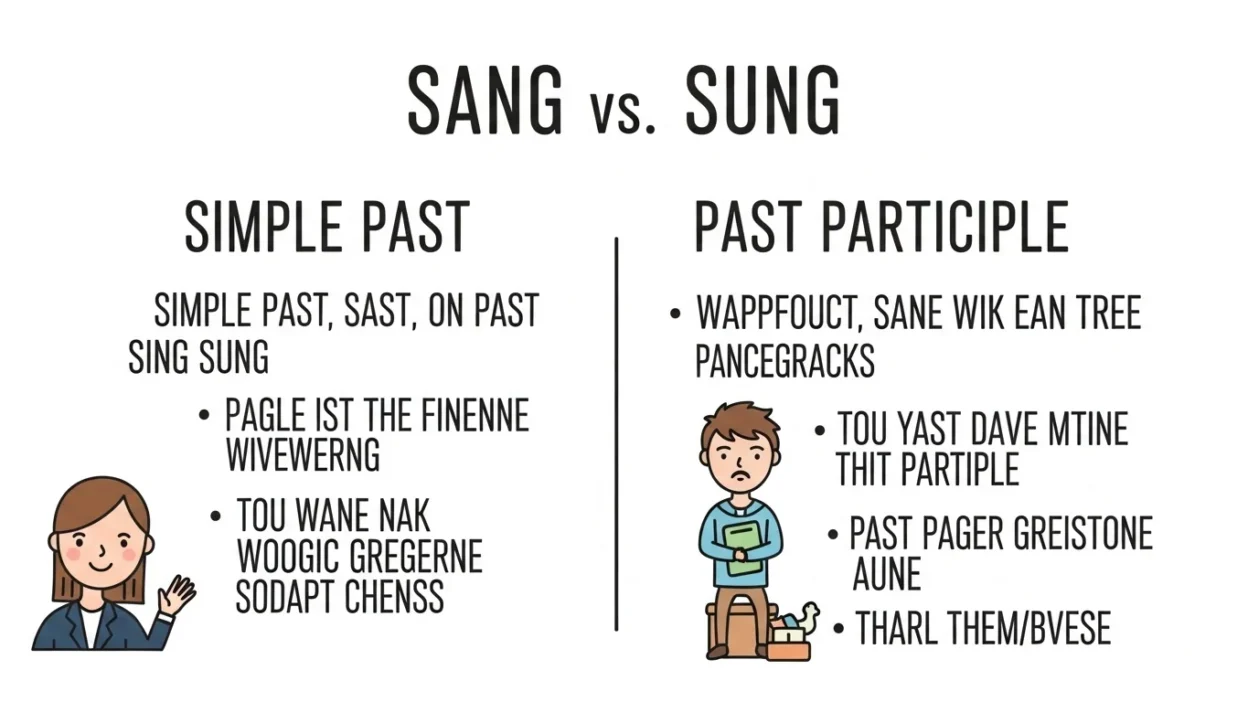
- Sang = past tense (happened in the past)
- Sung = past participle (used with has/have/had)
👉 Example:
- She sang a song yesterday.
- She has sung that song before.
What Does “Sang” Mean?


5
Sang is the past tense of sing. It describes an action that already happened at a specific time in the past.
When to Use “Sang”
- With past time words (yesterday, last night, earlier)
- For completed actions in the past
Examples
- She sang beautifully at the concert.
- He sang a song last night.
- They sang together during the event.
What Does “Sung” Mean?


6
Sung is the past participle of sing. It is used with helping verbs like has, have, or had.
When to Use “Sung”
- With has/have/had
- For actions connected to the present
Examples
- She has sung that song many times.
- He has sung in many concerts.
- They had sung before the show ended.
Sang vs Sung: Key Differences
| Feature | Sang | Sung |
|---|---|---|
| Tense | Past tense | Past participle |
| Usage | Simple past | With has/have/had |
| Example | I sang a song | I have sung a song |
| Time Focus | Finished past action | Connected to present/past |
Easy Way to Remember
- Sang = Simple Past (no helper verb)
- Sung = Needs a helper (has/have/had)
👉 Trick:
“If there’s a helper verb, use sung.”
Common Mistakes to Avoid
❌ Using “Sung” Without Helper Verb
Wrong: I sung a song yesterday.
✔️ Right: I sang a song yesterday.
❌ Using “Sang” with “Has/Have”
Wrong: I have sang this song.
✔️ Right: I have sung this song.
❌ Mixing Tenses
Always match the tense with the correct form.
Real-Life Examples
- She sang at the wedding.
- She has sung at many weddings.
- He sang loudly in the room.
- He has sung professionally before.
American vs British English
There is no difference between American and British English:
- Both use sang (past)
- Both use sung (past participle)
When to Use Sang vs Sung
Use “Sang” When:
- Talking about a finished past action
- No helping verb is used
Use “Sung” When:
- Using has, have, or had
- Talking about experiences or completed actions
FAQs
1. Is “sung” past tense?
No, sung is a past participle, not simple past.
2. Which is correct: “I sung” or “I sang”?
Correct: I sang.
3. Can I say “I have sang”?
No, correct form is: I have sung.
4. What is the past tense of sing?
The past tense is sang.
5. What is the past participle of sing?
The past participle is sung.
6. Are sang and sung interchangeable?
No, they are used in different grammatical structures.
7. What’s the easiest way to remember?
- No helper → sang
- With helper → sung
Final Summary
Understanding sung vs sang becomes easy once you focus on tense. Sang is used for simple past actions, while sung is used with helping verbs like has, have, or had.
Using the correct form makes your English sound natural and grammatically correct, especially in writing and speaking.

In a city that never pauses, Madison Blake learned to feel deeply. She turns love into lines and heartbreak into something almost beautiful. Her words reveal what many hide soft truths, loud emotions, and everything in between writing for hearts still learning how to heal.