If you’ve ever wondered whether to use sown or sewn, you’re not alone. These two words look similar and sound alike—but they actually come from different verbs and have completely different meanings.
In this simple, SEO-friendly guide, you’ll learn the exact difference between sown vs sewn, with clear meanings, examples, common mistakes, and easy memory tricks.
Quick Answer
- Sown = past participle of sow (to plant seeds) 🌱
- Sewn = past participle of sew (to stitch fabric) 🧵
👉 Example:
- The farmer has sown the seeds.
- She has sewn a beautiful dress.
What Does “Sown” Mean?


6
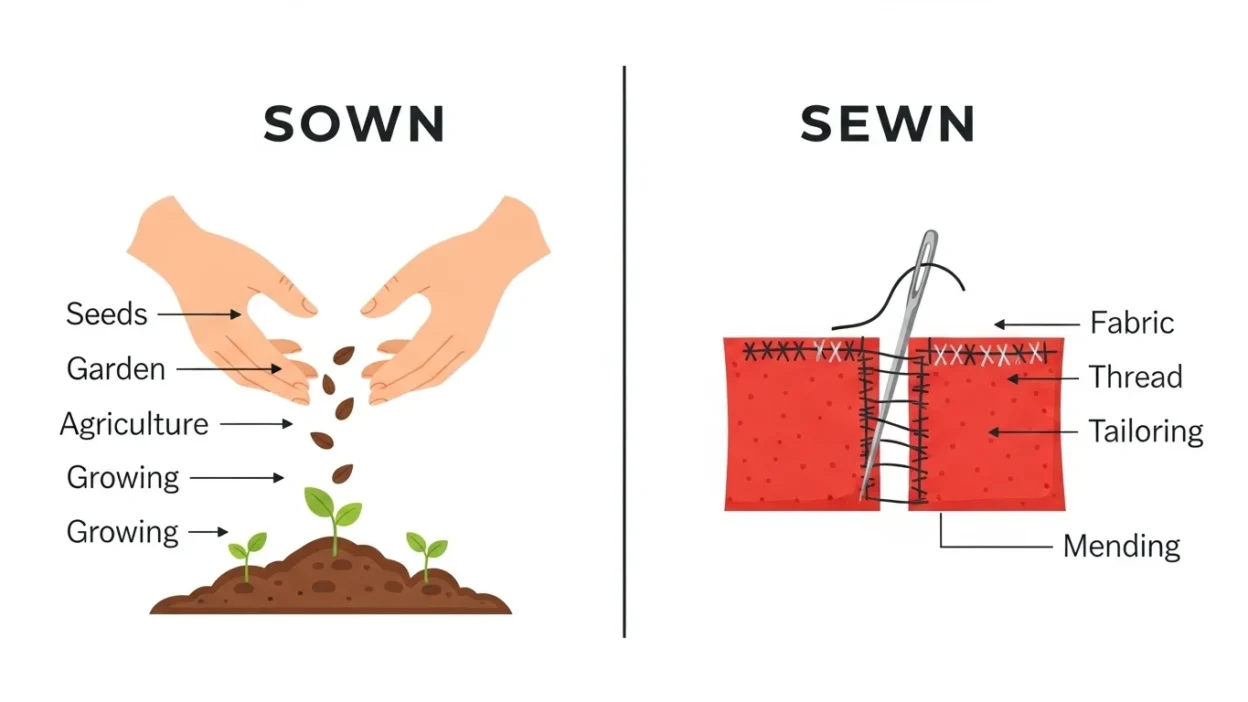
Sown comes from the verb sow, which means to plant seeds in the ground.
When to Use “Sown”
- In farming or gardening contexts
- When talking about planting seeds
- Often used with “has/have/had”
Examples
- The farmer has sown the wheat seeds.
- They had sown crops before the rain started.
- Seeds were sown across the field.
Related Keywords (LSI)
- planted
- cultivated
- scattered seeds
- agriculture
What Does “Sewn” Mean?
6
Sewn comes from the verb sew, which means to join or stitch fabric using a needle and thread.
When to Use “Sewn”
- In clothing or tailoring contexts
- When talking about stitching or repairing fabric
- Also used with “has/have/had”
Examples
- She has sewn a new shirt.
- The tailor had sewn the dress perfectly.
- The patch was sewn onto the jacket.
Related Keywords (LSI)
- stitched
- tailored
- crafted
- needlework
Sown vs Sewn: Key Differences
| Feature | Sown | Sewn |
|---|---|---|
| Verb Origin | Sow (plant seeds) | Sew (stitch fabric) |
| Meaning | Planting | Stitching |
| Context | Farming, gardening | Clothing, sewing |
| Example | Seeds were sown | Clothes were sewn |
Easy Way to Remember
👉 Sown = Soil (both start with “so”) 🌱
👉 Sewn = Stitch (both related to sewing) 🧵
Or think:
- Sown → seeds
- Sewn → shirt
Common Mistakes to Avoid
❌ Mixing the Words
Wrong: She has sown a dress.
✔️ Right: She has sewn a dress.
Wrong: The farmer has sewn seeds.
✔️ Right: The farmer has sown seeds.
❌ Using Without Context
Always check if you’re talking about:
- Plants → sown
- Clothes → sewn
Real-Life Examples
- The field was sown with rice seeds.
- She has sewn her own clothes.
- Farmers had sown crops before winter.
- The tailor has sewn the uniform.
American vs British English
There is no difference in spelling:
- ✔️ American English: sown / sewn
- ✔️ British English: sown / sewn
Same usage in both.
When to Use Sown vs Sewn
Use “Sown” When:
- Talking about planting seeds
- Referring to agriculture or gardening
Use “Sewn” When:
- Talking about stitching clothes
- Referring to tailoring or fabric
FAQs
1. Is “sown” related to sewing?
No, sown is about planting seeds, not stitching.
2. What is the past participle of sew?
The past participle of sew is sewn.
3. Can I say “sewn seeds”?
No, correct form is sown seeds.
4. Is “sowed” also correct?
Yes, sowed is past tense, but sown is more commonly used as past participle.
5. Can “sewn” be used for machines?
Yes: The fabric was sewn using a machine.
6. Are these words interchangeable?
No, they have completely different meanings.
7. Which is more common?
Both are common but used in different contexts.
Final Summary
Understanding sown vs sewn is easy once you connect each word to its meaning. Sown relates to planting seeds in soil, while sewn refers to stitching fabric with a needle and thread. Even though they sound similar, they belong to completely different actions.
Using the correct word ensures your writing is clear, accurate, and professional—especially in academic, creative, or everyday contexts.

In a city that never pauses, Madison Blake learned to feel deeply. She turns love into lines and heartbreak into something almost beautiful. Her words reveal what many hide soft truths, loud emotions, and everything in between writing for hearts still learning how to heal.