If you’ve ever wondered whether to write send or sent, you’re not alone. These two words come from the same verb, but they’re used in completely different situations depending on time (tense).
In this simple, SEO-friendly guide, you’ll learn the exact difference between send vs sent, with clear meanings, examples, common mistakes, and easy tricks to remember forever.
Quick Answer
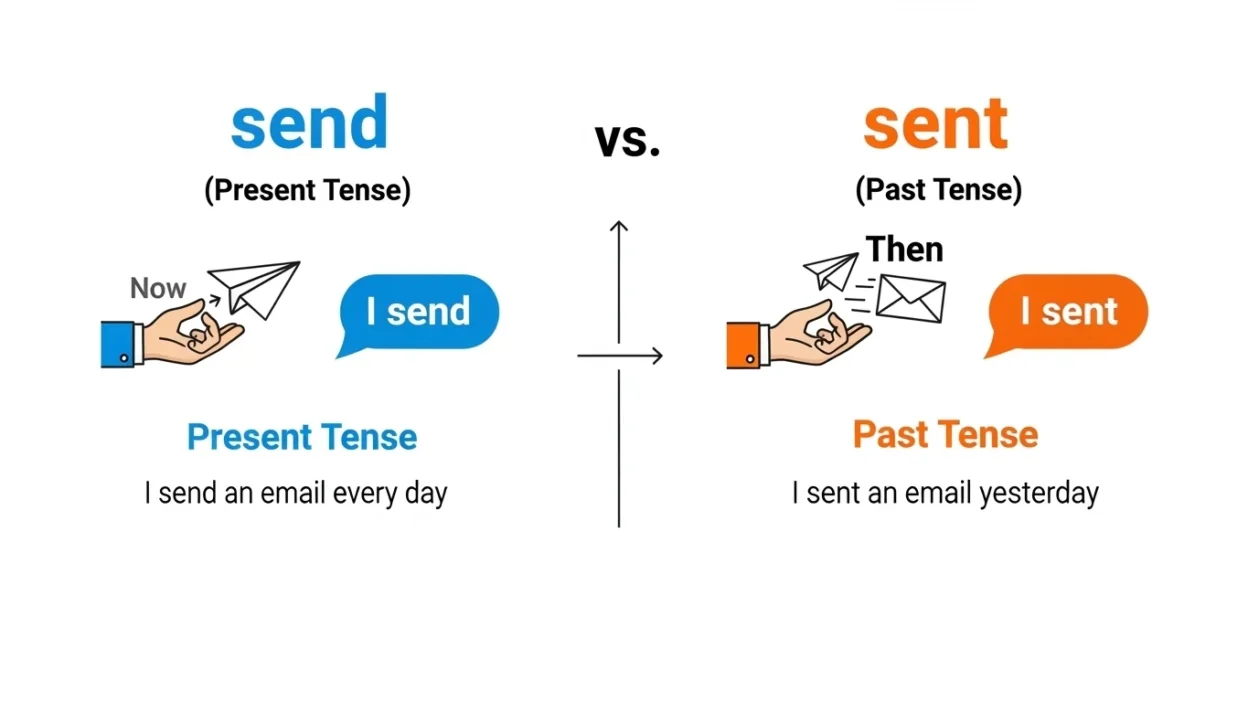
- Send = present tense (now or general action)
- Sent = past tense (already happened)
👉 Example:
- I send emails every day.
- I sent the email yesterday.
What Does “Send” Mean?


6
Send is the base form (present tense) of the verb. It means to cause something to go or be delivered somewhere.
When to Use “Send”
- For present actions
- For habits or routines
- With “will” for future
Examples
- I send messages to my friends daily.
- Please send me the file.
- I will send the details later.
Related Keywords (LSI)
- deliver
- transmit
- share
- forward
What Does “Sent” Mean?


6
Sent is the past tense and past participle of “send.” It refers to something that has already happened.
When to Use “Sent”
- For completed actions in the past
- With “has/have/had”
Examples
- I sent the email yesterday.
- She has sent the documents already.
- They sent a gift last week.
Send vs Sent: Key Differences
| Feature | Send | Sent |
|---|---|---|
| Tense | Present | Past |
| Usage | Current or future actions | Completed actions |
| Example | I send a message | I sent a message |
| Grammar Form | Base verb | Past / past participle |
Easy Way to Remember
- Send = Now
- Sent = Finished
👉 Trick:
“Sent = End (already ended action)”
Common Mistakes to Avoid
❌ Using “Send” for Past
Wrong: I send the email yesterday.
✔️ Right: I sent the email yesterday.
❌ Using “Sent” for Present
Wrong: I sent emails every day.
✔️ Right: I send emails every day.
❌ Confusion with Helping Verbs
- ✔️ I have sent the file.
- ❌ I have send the file.
Real-Life Examples
- Please send me your address.
- I sent you the address last night.
- We send updates every week.
- They sent the package already.
American vs British English
There is no difference between American and British English:
- Both use send (present)
- Both use sent (past)
When to Use Send vs Sent
Use “Send” When:
- Talking about now or future
- Giving instructions
- Describing habits
Use “Sent” When:
- Talking about the past
- Describing completed actions
- Using “has/have/had”
FAQs
1. Is “sent” past tense of send?
Yes, sent is the past tense and past participle of send.
2. Can I say “I have send”?
No, correct form is: I have sent.
3. Which is correct: “I send it yesterday”?
Incorrect. Correct: I sent it yesterday.
4. Is “send” used for future?
Yes: I will send it tomorrow.
5. What is the past participle of send?
The past participle is sent.
6. Can I use “sent” without a time?
Yes: I have sent the email.
7. Are send and sent interchangeable?
No, they depend on tense.
Final Summary
Understanding send vs sent is all about tense. Send is used for present or future actions, while sent is used for past actions that are already completed. Once you focus on timing, the confusion disappears.
Using the correct form improves your grammar, writing clarity, and professionalism especially in emails, messages, and formal communication.

In a city that never pauses, Madison Blake learned to feel deeply. She turns love into lines and heartbreak into something almost beautiful. Her words reveal what many hide soft truths, loud emotions, and everything in between writing for hearts still learning how to heal.