If you’re unsure whether to use leaped or leapt, here’s the good news: both are correct. The difference isn’t about right or wrong it’s about style and regional preference.
In this clear, friendly guide, you’ll learn when to use leaped vs leapt, see real examples, avoid confusion, and pick the best option for your writing.
Quick Answer
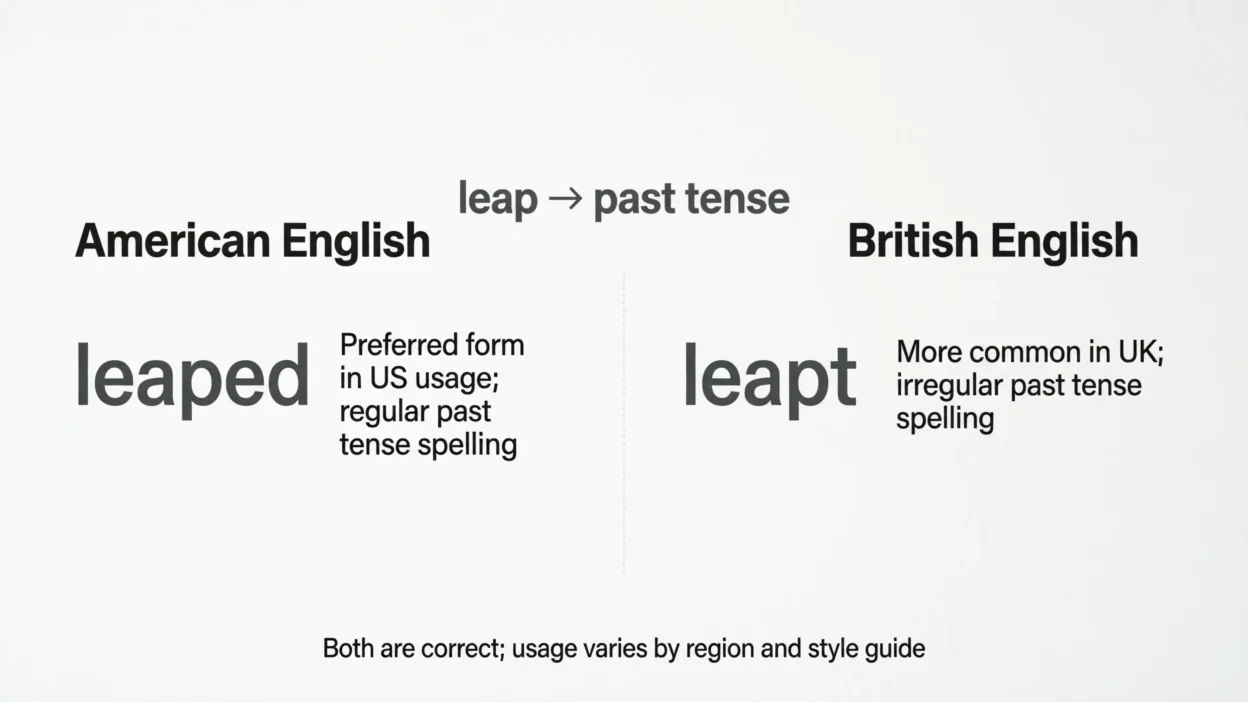
- ✔️ Leaped = more common in American English
- ✔️ Leapt = more common in British English
👉 Both mean the same: jumped or sprang into the air
What Does “Leaped” Mean?


6
Leaped is the past tense of “leap”, meaning to jump or spring forward.
When to Use “Leaped”
- In American English writing
- In modern, simple tone
Examples
- He leaped over the fence.
- The dog leaped into the air.
- She leaped with excitement.
What Does “Leapt” Mean?


7
Leapt is also the past tense of “leap”, with the same meaning—but it has a slightly more traditional or literary tone.
When to Use “Leapt”
- In British English
- In storytelling or formal writing
Examples
- He leapt across the stream.
- The cat leapt onto the table.
- Her heart leapt with joy.
Leaped vs Leapt: Key Differences
| Feature | Leaped | Leapt |
|---|---|---|
| Meaning | Jumped | Jumped |
| Region | American English | British English |
| Tone | Modern, simple | Literary, traditional |
| Usage | More common globally | Slightly less common |
Easy Way to Remember
- Leaped = America (simple, regular form)
- Leapt = Britain (classic style)
👉 Trick:
“APT in leapt → sounds more formal”
Common Mistakes to Avoid
❌ Thinking One Is Wrong
Both are correct—don’t worry about choosing the “wrong” one.
❌ Mixing Styles in Writing
Try to stay consistent:
- Use leaped for modern tone
- Use leapt for formal or British tone
❌ Overthinking the Choice
In most cases, either word works fine.
Real-Life Examples
- The athlete leaped over the hurdle.
- The athlete leapt over the hurdle.
👉 Both sentences are correct.
- The dog leaped into the water.
- The dog leapt into the water.
American vs British English
American English
- Prefers leaped
British English
- Prefers leapt
👉 But both forms are understood everywhere.
When to Use Leaped vs Leapt
Use “Leaped” When:
- Writing for American audience
- Keeping language simple and modern
Use “Leapt” When:
- Writing in British English
- Creating a dramatic or literary tone
FAQs
1. Is “leapt” incorrect?
No, it’s completely correct.
2. Which is more common?
Leaped is more common globally.
3. Are they interchangeable?
Yes, in most contexts.
4. Which should I use in exams?
Either is fine—just stay consistent.
5. Is “leapt” more formal?
Yes, slightly more literary or traditional.
6. Do Americans use “leapt”?
Sometimes, but less often.
7. What’s the easiest choice?
Use leaped if unsure.
Final Summary
Understanding leaped vs leapt is simple: both are correct past forms of leap. The only difference is style—leaped is more common in American English, while leapt is preferred in British English and formal writing.
Choosing the right one depends on your audience and tone, not grammar rules.

Born where forests whisper and rain writes stories on glass, Ethan Walker found meaning in silence. He writes not to impress but to express the quiet battles, unseen growth, and the beauty of becoming. His words are simple yet lasting, like echoes the heart refuses to forget.