If you’ve ever hesitated between protesters and protestors, you’re not alone. Both spellings exist, but one is clearly more common—and preferred in most modern writing.
In this easy, human-friendly guide, you’ll learn the difference between protesters vs protestors, when to use each, examples, common mistakes, and a simple rule to remember.
Quick Answer
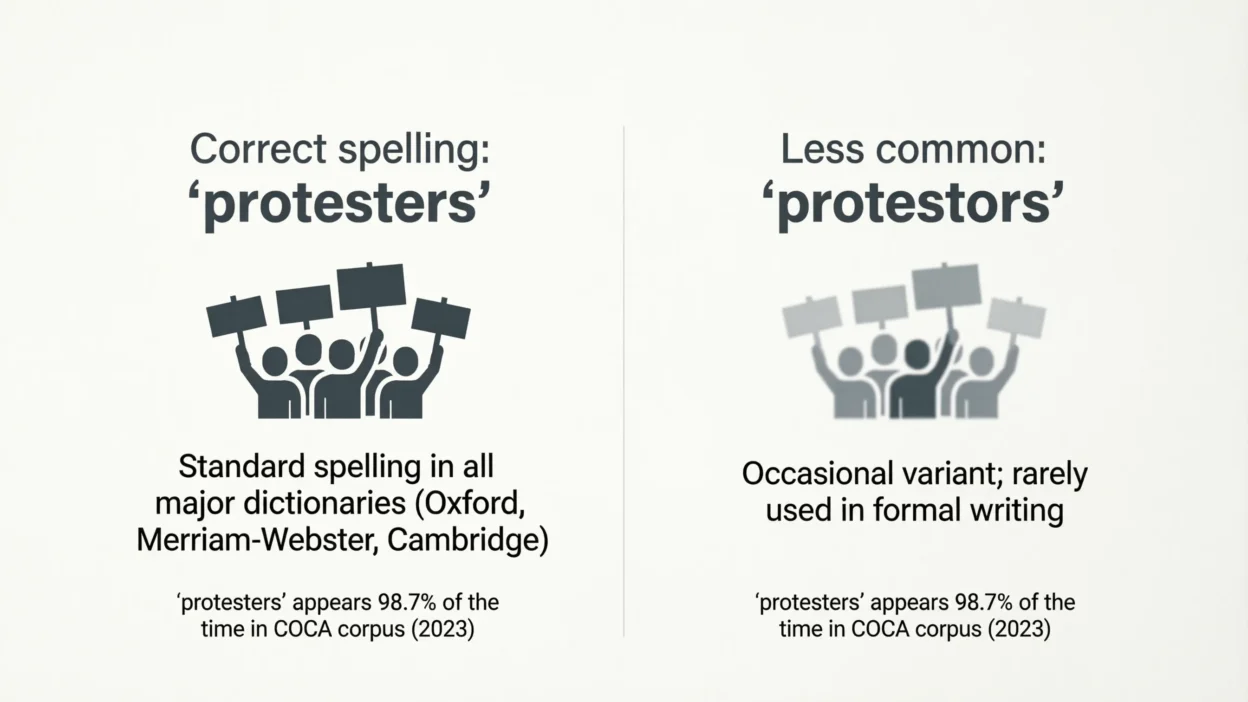
- ✔️ Protesters = correct and most common spelling
- ✔️ Protestors = less common, but still accepted
👉 Best choice: Use “protesters” in most cases
What Does “Protesters” Mean?


6
Protesters are people who publicly express disagreement or opposition, often by gathering, marching, or demonstrating.
Examples
- The protesters gathered in the city center.
- Hundreds of protesters marched peacefully.
- The protesters demanded change.
What About “Protestors”?


8
Protestors means the same thing—but it’s less commonly used.
- You may still see it in older texts or some regional usage
- However, it’s not the preferred spelling in modern English
👉 In most cases, “protesters” is the safer and better choice
Protesters vs Protestors: Key Differences
| Feature | Protesters | Protestors |
|---|---|---|
| Meaning | People who protest | Same meaning |
| Usage | Very common | Less common |
| Preference | Modern standard | Alternative spelling |
| Recommendation | ✔️ Use this | ⚠️ Avoid if unsure |
Why “Protesters” Is Preferred
Most modern English follows a pattern:
- Verb + -er (common agent noun form)
- Teach → Teacher
- Work → Worker
- Protest → Protester
👉 That’s why protesters feels more natural and widely accepted.
Easy Way to Remember
- Protester = standard English pattern
- Protestor = less common variation
👉 Trick:
“If in doubt, always choose -er”
Common Mistakes to Avoid
❌ Using Rare Form in Formal Writing
While “protestors” isn’t wrong, it may look less professional.
✔️ Use protesters in:
- Essays
- Blogs
- Exams
- News writing
❌ Mixing Both in Same Text
Stay consistent—don’t switch between spellings.
Real-Life Examples
- The protesters blocked the road.
- Many protesters carried signs.
- The protesters demanded justice.
👉 These would also work with “protestors,” but are less common.
American vs British English
There’s no major difference:
- ✔️ American English prefers protesters
- ✔️ British English also mostly uses protesters
👉 “Protestors” appears occasionally in both, but rarely.
When to Use Protesters vs Protestors
Use “Protesters” When:
- Writing professionally
- Creating blog content
- Preparing for exams
- Wanting standard usage
Use “Protestors” When:
- You’re following a specific style guide that prefers it
- Quoting older or original text
FAQs
1. Is “protestors” incorrect?
No, it’s not incorrect—but it’s less common.
2. Which spelling is better?
Protesters is better and more widely accepted.
3. Do both mean the same thing?
Yes, they have identical meanings.
4. Which is used in news writing?
Most news outlets use protesters.
5. Is this a common confusion?
Yes, especially in writing.
6. Should I avoid “protestors”?
Not necessary, but safer to use protesters.
7. What’s the easiest rule?
Use -er endings for consistency.
Final Summary
Understanding protesters vs protestors is simple: both are correct, but protesters is the preferred and more common spelling. It follows standard English patterns and is widely used in modern writing.

In a city that never pauses, Madison Blake learned to feel deeply. She turns love into lines and heartbreak into something almost beautiful. Her words reveal what many hide soft truths, loud emotions, and everything in between writing for hearts still learning how to heal.