
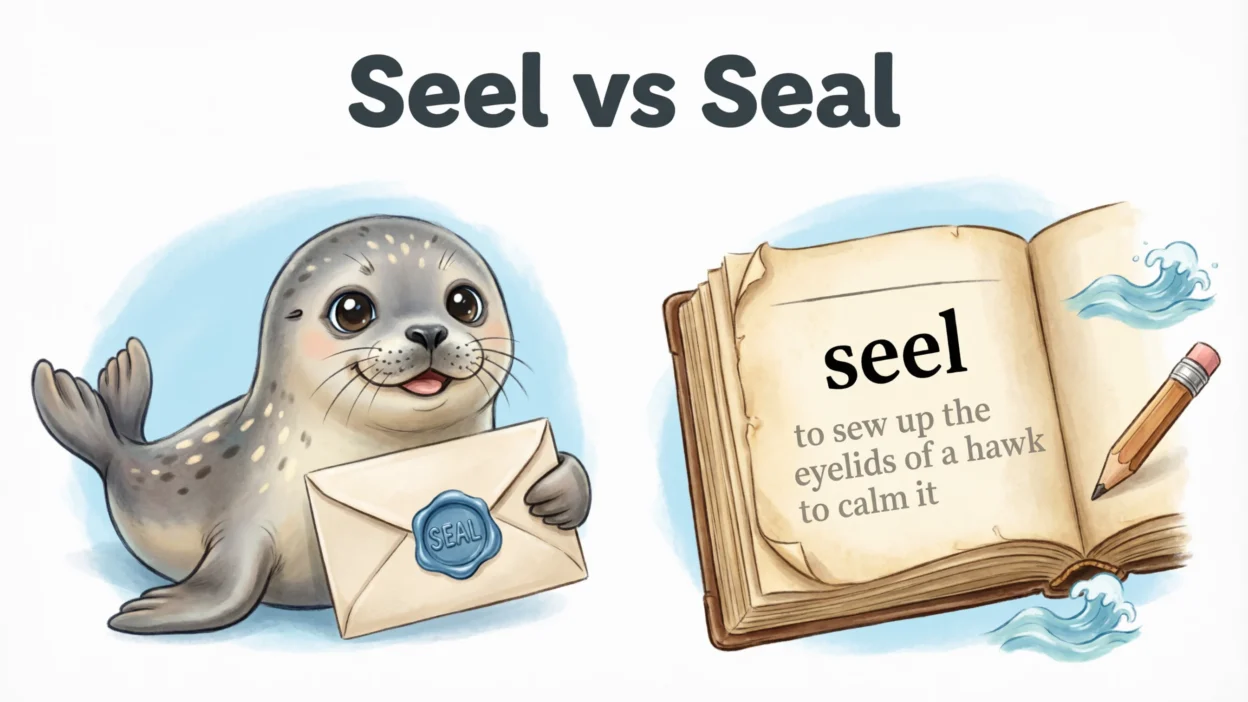
The words seel and seal may look similar, but they have very different meanings and levels of usage in modern English. One is a common everyday word used in many contexts, while the other is rare and mostly found in historical or specialized language.
In most situations, seal is the correct word people want to use. The spelling seel is uncommon and often mistaken for a typo. Understanding the difference can help improve your spelling, vocabulary, and writing accuracy.
This guide explains the meanings, examples, pronunciation, grammar usage, common mistakes, and American vs British English differences for seel and seal.
Quick Answer
- Seal is the common and correct word in modern English.
- Seel is a rare old-fashioned word with specialized meanings.
Simple Difference
- Seal = close tightly, stamp, or marine animal
- Seel = historical term rarely used today
What Does “Seal” Mean?
The word seal has several common meanings in English. It can function as both:
- a noun
- a verb
Seal as a Noun
Meaning 1: Marine Animal
A seal is a sea mammal with flippers.
Examples
- We saw a seal at the aquarium.
- Seals swim gracefully in cold water.
Meaning 2: Official Stamp or Symbol
A seal can also mean an official mark or emblem.
Examples
- The document carried the royal seal.
- The package had a security seal.
Seal as a Verb
As a verb, seal means:
- to close tightly
- to secure
- to finalize something
Examples
- Please seal the envelope.
- Workers sealed the windows.
- The deal was sealed yesterday.
Common Expressions With Seal
Seal the Deal
Meaning:
- finalize an agreement
Example:
- They sealed the deal after negotiations.
Sealed With a Kiss
Meaning:
- closed lovingly or romantically
Example:
- The letter was sealed with a kiss.
What Does “Seel” Mean?
Seel is a rare and old-fashioned English word. Historically, it had meanings related to:
- sewing shut the eyes of birds in falconry
- closing the eyes
- blinding temporarily
It is rarely used in modern English outside historical literature or specialized discussions.
Historical Example
- The falconer seel’d the bird’s eyes.
Today, most native speakers never use this word in everyday conversation.
Seel vs Seal: Main Difference
| Word | Meaning | Modern Usage |
|---|---|---|
| Seal | Common word with many meanings | Very common |
| Seel | Rare historical term | Extremely uncommon |
Pronunciation Difference
Seal
Pronounced:
- seel
Seel
Pronounced:
- seel
Both words sound exactly the same, which is why spelling confusion happens.
Why “Seal” Is Usually Correct
In modern English, nearly all situations require:
- seal
Common Contexts
- envelopes
- legal documents
- waterproofing
- agreements
- marine animals
Meanwhile, seel appears mostly in:
- historical texts
- Shakespearean language
- falconry terminology
Common Mistakes People Make
Mistake 1: Typing “Seel” Instead of “Seal”
Incorrect:
- Please seel the package.
Correct:
- Please seal the package.
Mistake 2: Assuming Seel Is a Modern Variant
It is not a modern alternative spelling.
Mistake 3: Confusing Pronunciation With Spelling
Since both words sound identical, spelling errors are easy to make.
American vs British English Differences
There is no major spelling difference between American and British English here.
Both Prefer:
- seal
Both Rarely Use:
- seel
Examples in Everyday Sentences
Correct Sentences With “Seal”
- She used tape to seal the box.
- The seal balanced a ball on its nose.
- They sealed the contract successfully.
- The jar must be tightly sealed.
Rare Historical Sentences With “Seel”
- Ancient falconers would seel birds temporarily.
Easy Memory Trick
Here’s a simple way to remember:
- Seal is the common modern word.
- Think of:
- sealing an envelope
- a seal in the ocean
If you mean anything practical or modern, you almost certainly want:
- seal
Related Words and LSI Keywords
Here are related phrases connected to seel or seal:
- seal meaning
- seel definition
- seal spelling
- commonly confused words
- homophones in English
- grammar mistakes
- seal animal
- seal a document
- historical English words
- English vocabulary tips
FAQs About Seel or Seal
Which spelling is correct: seel or seal?
In modern English, seal is usually the correct word.
Is seel a real word?
Yes, but it is extremely rare and mostly historical.
What does seal mean?
It can mean:
- a marine animal
- a tight closure
- an official stamp
- to close securely
Why do people confuse seel and seal?
Because they are pronounced exactly the same.
Is seel used today?
Very rarely, mostly in historical or literary contexts.
Do British and American English differ here?
No. Both strongly prefer seal.
What does “seal the deal” mean?
It means to finalize an agreement successfully.
Final Thoughts on Seel vs Seal
The difference between seel or seal mainly comes down to modern versus historical usage. Seal is the standard modern English word used for closures, agreements, stamps, and marine animals. Meanwhile, seel is a rare historical term that most people never use in everyday writing or speech.

In a city that never pauses, Madison Blake learned to feel deeply. She turns love into lines and heartbreak into something almost beautiful. Her words reveal what many hide soft truths, loud emotions, and everything in between writing for hearts still learning how to heal.