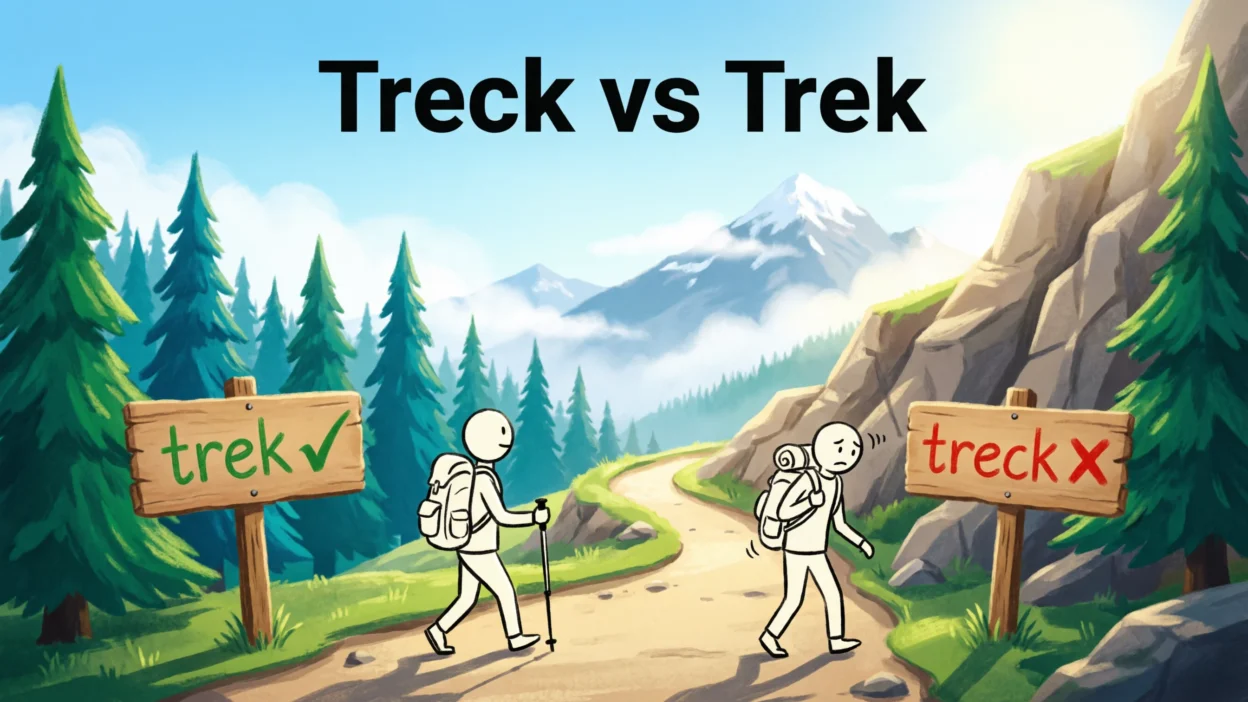
The confusion between treck and trek is common because both forms appear online, and the pronunciation can make it seem like an extra c is needed. However, in standard English, only one spelling is correct.
The correct spelling is trek, while treck is considered a misspelling in modern English. Whether you’re talking about hiking through mountains, taking a long journey, or using the word figuratively, trek is the form you should use.
Quick Answer
- Trek is the correct spelling.
- Treck is a misspelling.
Correct Examples
- We went on a trek through the Himalayas.
- The travelers began a long trek across the desert.
- It was a difficult trek to the summit.
What Does “Trek” Mean?
Trek can be used as a noun or a verb.
It generally means:
- a long journey
- a difficult hike
- traveling over a challenging route
Examples of Trek
- They completed a week-long trek in the mountains.
- We trekked through the forest.
- The trek to the village took several hours.
- Thousands of tourists trek there every year.
Why “Treck” Is Incorrect
The spelling treck is not recognized as the standard English form of the word.
Correct Spelling
- trek
Incorrect Spelling
- treck
Most dictionaries list only trek as the accepted spelling.
Trek vs Treck: Main Difference
| Word | Status | Meaning |
|---|---|---|
| Trek | Correct | A long or difficult journey |
| Treck | Incorrect | Misspelling |
Common Uses of “Trek”
Hiking and Adventure
- The group enjoyed a mountain trek.
Travel
- Their trek across the country lasted months.
Figurative Use
- The daily trek to work can be exhausting.
Outdoor Activities
- Many tourists trek in national parks.
Verb Forms of Trek
| Form | Word |
|---|---|
| Base Verb | trek |
| Past Tense | trekked |
| Past Participle | trekked |
| Present Participle | trekking |
Examples
- We trekked across the valley.
- They are trekking through the mountains.
- She has trekked there before.
Common Mistakes People Make
Mistake 1: Writing Treck
Incorrect:
- We went on a treck.
Correct:
- We went on a trek.
Mistake 2: Adding an Extra “C”
The correct word is spelled with only:
- T-R-E-K
Mistake 3: Confusing Trek With Similar Words
Words like check and wreck may make people think treck is correct, but it isn’t.
American vs British English Differences
There is no spelling difference.
Both Use:
- trek
- trekked
- trekking
Both Reject:
- treck
Examples in Everyday Sentences
Correct Sentences With “Trek”
- The trek was challenging but rewarding.
- We trekked through snowy terrain.
- Their annual trek attracts many hikers.
- She loves trekking on weekends.
Incorrect Sentences With “Treck”
- We enjoyed the treck. ❌
- They trecked across the hills. ❌
Easy Memory Trick
Think of the famous franchise:
- Star Trek
Notice that it’s spelled:
- Trek
Not:
- Treck
If Star Trek uses trek, so should you.
Related Words and LSI Keywords
Here are related phrases connected to treck or trek:
- trek meaning
- trekking definition
- hiking terminology
- outdoor adventure
- long journey
- mountain trekking
- common spelling mistakes
- travel vocabulary
- English grammar tips
- correct spelling of trek
FAQs About Treck or Trek
Which spelling is correct: treck or trek?
Trek is the correct spelling.
Is treck a real word?
No. It is generally considered a misspelling of trek.
What does trek mean?
It means a long or difficult journey, often on foot.
How do you use trek in a sentence?
Example:
- We went on a trek through the mountains.
What is the past tense of trek?
The past tense is trekked.
Do British and American English spell it differently?
No. Both use trek.
Is trekking a real word?
Yes. Trekking is the present participle of trek.
Final Thoughts on Trek vs Treck
The difference between treck or trek is simple: trek is the correct spelling, while treck is a common spelling mistake. Whether you’re discussing hiking, travel, exploration, or a long journey, trek is the form recognized by standard English dictionaries.
Born where forests whisper and rain writes stories on glass, Ethan Walker found meaning in silence. He writes not to impress but to express the quiet battles, unseen growth, and the beauty of becoming. His words are simple yet lasting, like echoes the heart refuses to forget.