The words seen and saw are both forms of the verb “see,” but they are used differently in English grammar. Because they relate to the same action, many learners accidentally mix them up in speech and writing.
The good news is that the difference is actually simple once you understand the grammar rule. In this guide, you’ll learn the meaning of seen and saw, how to use them correctly, common mistakes, examples, and differences in American and British English.
Quick Answer
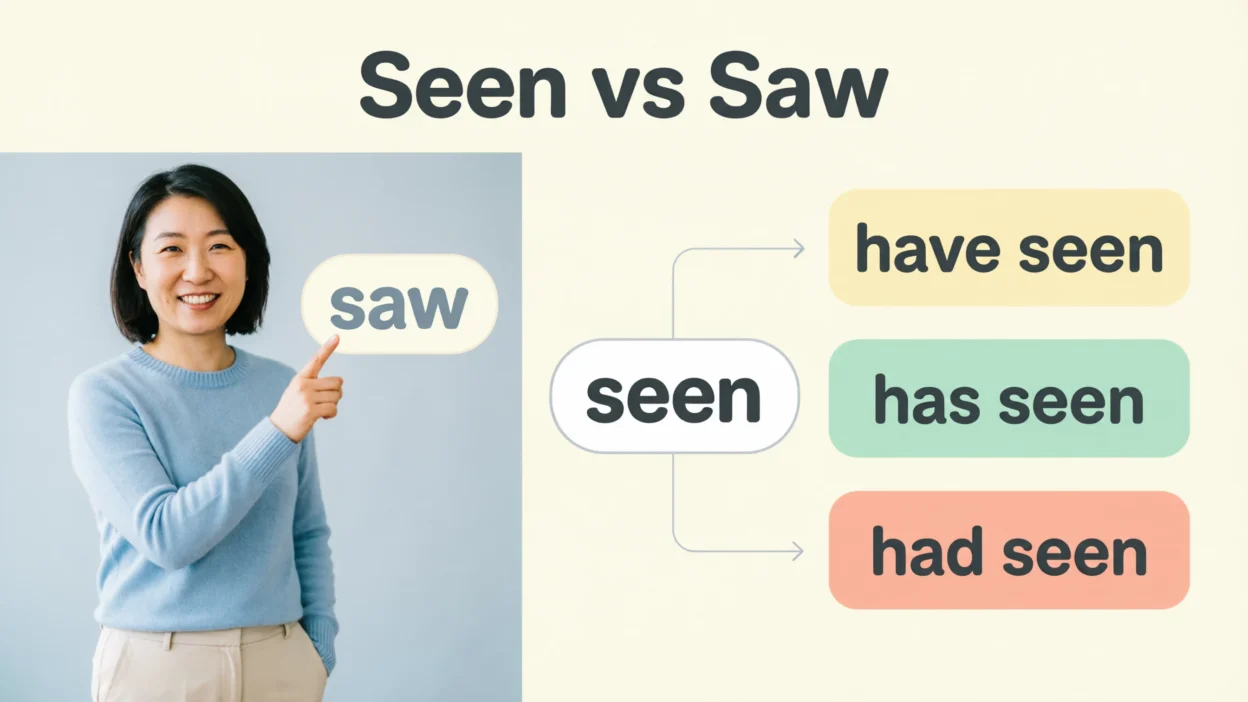
- Saw is the simple past tense of see.
- Seen is the past participle and must be used with a helping verb like have, has, or had.
Correct Examples
- I saw the movie yesterday.
- I have seen that movie before.
What Does “Saw” Mean?
Saw is the simple past tense form of the verb see. It describes something you viewed or experienced in the past.
Examples of Saw
- I saw a rainbow this morning.
- She saw her friend at the mall.
- We saw a great movie last night.
- He saw the accident happen.
- They saw birds flying overhead.
When to Use “Saw”
Use saw when:
- talking about a completed action in the past
- no helping verb is used
Sentence Pattern
Subject + saw + object
Examples
- I saw him yesterday.
- She saw the message earlier.
- We saw snow for the first time.
What Does “Seen” Mean?
Seen is the past participle form of see. It cannot usually stand alone as the main verb. It needs a helping verb such as:
- have
- has
- had
- be
Examples of Seen
- I have seen that show before.
- She has seen the new teacher.
- They had seen the warning signs.
- The movie was seen by millions.
When to Use “Seen”
Use seen with helping verbs.
Sentence Pattern
Subject + helping verb + seen
Examples
- I have seen this place before.
- He had seen enough.
- We have seen better days.
Seen vs Saw: Main Difference
| Word | Grammar Role | Example |
|---|---|---|
| Saw | Simple past tense | I saw the dog. |
| Seen | Past participle | I have seen the dog. |
Easy Grammar Rule
Here’s the simplest way to remember it:
- If there is no helping verb, use saw
- If there is a helping verb like have, has, or had, use seen
Correct
- I saw her yesterday.
- I have seen her before.
Incorrect
- I seen her yesterday.
- I have saw her before.
Common Mistakes People Make
Mistake 1: “I Seen”
Incorrect:
- I seen the movie yesterday.
Correct:
- I saw the movie yesterday.
Why? Because there’s no helping verb.
Mistake 2: “Have Saw”
Incorrect:
- I have saw that film.
Correct:
- I have seen that film.
Why? Because seen must follow helping verbs.
Mistake 3: Mixing Spoken Informal English With Grammar
In some regional dialects, people say:
- “I seen it.”
But in standard English grammar, this is incorrect.
American vs British English Differences
There is no major difference between American and British English in the grammar rules for seen and saw.
Both Use:
- saw = simple past
- seen = past participle
However, informal speech patterns may vary by region.
Verb Forms of “See”
| Verb Form | Word |
|---|---|
| Base form | see |
| Past tense | saw |
| Past participle | seen |
| Present participle | seeing |
Examples in Everyday Sentences
Sentences With “Saw”
- I saw your brother today.
- She saw a spider in the kitchen.
- We saw fireworks at the festival.
Sentences With “Seen”
- I have seen this episode already.
- They had seen the problem coming.
- He has seen many changes over the years.
Seen and Saw in Questions
Using Saw
- Did you saw the game? ❌
- Did you see the game? ✅
After did, use the base form see.
Using Seen
- Have you seen my keys?
- Had she seen the email?
Easy Memory Trick
Use this quick trick:
- Saw stands alone
- Seen needs a helper
If you notice words like:
- have
- has
- had
Then you probably need seen.
Related Words and LSI Keywords
Here are related phrases connected to seen or saw:
- see past tense
- seen meaning
- saw meaning
- English grammar rules
- past participle examples
- commonly confused words
- grammar mistakes
- verb forms of see
- simple past tense
- helping verbs in English
FAQs About Seen or Saw
Which is correct: seen or saw?
Both are correct, but they are used differently in grammar.
Can I say “I seen”?
Not in standard English. The correct phrase is “I saw.”
Is “have saw” correct?
No. You should say “have seen.”
What tense is saw?
Saw is the simple past tense of see.
What tense is seen?
Seen is the past participle form of see.
Why do people confuse seen and saw?
Because both come from the same verb and are often used in past-related contexts.
Is there a British vs American difference?
No major difference exists in grammar usage.
Final Thoughts on Seen vs Saw
The difference between seen or saw comes down to one important grammar rule. Saw works as the simple past tense and can stand alone, while seen is a past participle that needs a helping verb such as have, has, or had.
Although many people confuse the two in casual speech, using them correctly makes your English sound more polished and grammatically accurate. Once you remember that “seen needs a helper,” choosing the right word becomes much easier.
Actionable Takeaway
Before choosing between seen and saw, check your sentence:
- No helping verb? → Use saw
- Helping verb present? → Use seen
That quick grammar check will help you avoid one of the most common English mistakes.

In a city that never pauses, Madison Blake learned to feel deeply. She turns love into lines and heartbreak into something almost beautiful. Her words reveal what many hide soft truths, loud emotions, and everything in between writing for hearts still learning how to heal.