The words shined and shone both come from the verb “shine,” which is why many English learners and even native speakers get confused about which one to use. The good news is that both words are correct — but they are used in different situations and sometimes depend on regional English preferences.
Understanding the difference between shined and shone can help you sound more natural in writing and conversation. In this guide, you’ll learn the meanings, grammar rules, examples, common mistakes, and American vs British English differences in a simple and practical way.
Quick Answer
- Shone is traditionally used when something gives off light.
- Shined is commonly used when someone polishes or directs light at something.
- In American English, shined is more common overall.
- In British English, shone is preferred for emitting light.
What Does “Shone” Mean?
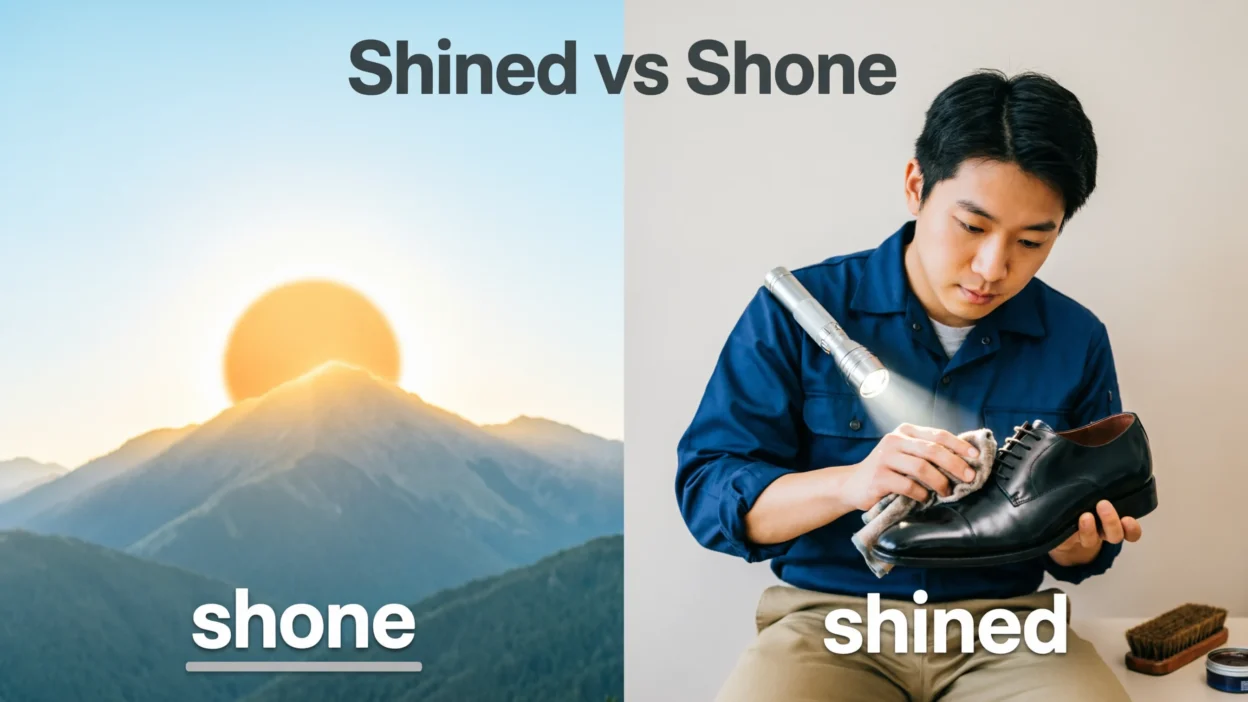
Shone is the traditional past tense and past participle of shine when talking about giving off light or glowing.
Examples of Shone
- The sun shone brightly all afternoon.
- Her eyes shone with happiness.
- The moon shone over the ocean.
- The stars shone in the dark sky.
- His talent shone through the performance.
Common Contexts for “Shone”
- Sunlight
- Moonlight
- Stars
- Glowing objects
- Emotional expressions
What Does “Shined” Mean?
Shined is often used when someone actively causes something to shine, especially through polishing or directing light.
Examples of Shined
- He shined his shoes before the interview.
- She shined the flashlight into the cave.
- The worker shined the silver carefully.
- I shined the lamp toward the wall.
- They shined the car until it looked new.
Shined vs Shone: Main Difference
| Word | Main Meaning | Example |
|---|---|---|
| Shone | Emitted light naturally | The sun shone brightly. |
| Shined | Polished or directed light | He shined his shoes. |
Is “Shined” Wrong?
No, shined is not wrong. In fact, it is very common in modern American English. Many Americans use shined for nearly all past-tense situations involving shine.
American English Examples
- The sun shined through the window.
- Her smile shined brightly.
While traditional grammar may prefer shone in these examples, shined is widely accepted in the United States.
British English vs American English
This is where the difference becomes more noticeable.
British English
British English usually prefers:
- Shone for emitting light
- Shined for polishing or directing light
Example:
- The stars shone brightly.
- He shined his boots.
American English
American English often accepts:
- Shined in most situations
- Shone in formal or literary writing
Example:
- The sun shined all day.
- The moon shone brightly.
Grammar Rule Made Simple
Here’s an easy way to remember:
Use “Shone” When:
Something naturally glows or gives light.
Examples:
- The candle shone softly.
- Her face shone with pride.
Use “Shined” When:
Someone causes brightness through action.
Examples:
- He shined the flashlight ahead.
- She shined the kitchen floor.
Common Mistakes People Make
Mistake 1: Thinking One Word Is Always Wrong
Both shined and shone are correct depending on context and regional style.
Mistake 2: Using “Shined” in Formal British Writing
In British English, formal writing usually prefers shone for natural light.
Mistake 3: Forgetting the Object Rule
If a person actively shines something, shined often sounds more natural.
Incorrect:
- He shone his shoes.
More natural:
- He shined his shoes.
Examples in Everyday Sentences
Sentences With “Shone”
- The diamond shone under the lights.
- Hope shone in her eyes.
- The lake shone in the morning sun.
Sentences With “Shined”
- He shined the torch at the door.
- She shined her boots before school.
- The janitor shined the hallway floor.
Which One Sounds More Natural?
In Casual American English
Both are usually acceptable.
In Formal or Literary English
Shone often sounds more elegant and traditional.
Example:
- The stars shone above the mountains.
In Action-Based Contexts
Shined is usually preferred.
Example:
- He shined the silver tray carefully.
Easy Memory Trick
Use this simple trick:
- Shone = something naturally glowing
- Shined = someone doing the action
If there’s a direct object involved, like shoes or a flashlight, shined is often the better choice.
Related Words and LSI Keywords
Here are some related phrases connected to shined vs shone:
- shine past tense
- shined meaning
- shone meaning
- grammar differences
- American vs British English
- correct use of shine
- shine verb forms
- English grammar tips
- past tense examples
- polished meaning
FAQs About Shined or Shone
Which is correct: shined or shone?
Both are correct, but they are used differently depending on context and regional English.
Is “shone” more formal?
Yes, shone often sounds more literary and formal.
Do Americans use “shined” more?
Yes. American English commonly uses shined in everyday speech.
Can I say “the sun shined”?
Yes, especially in American English. British English traditionally prefers “the sun shone.”
What is the past tense of shine?
Both shined and shone can serve as the past tense of shine.
Which word should I use in academic writing?
For formal or international writing, shone is often safer when discussing natural light.
Is “he shone his shoes” wrong?
Not completely wrong, but he shined his shoes sounds more natural to most speakers.
Final Thoughts on Shined vs Shone
The debate between shined or shone mainly comes down to context, grammar tradition, and regional preference. Shone is traditionally linked to natural light or glowing, while shined is commonly used for polishing or directing light at something.
In modern English, especially American English, both forms are widely accepted. Still, understanding the subtle difference can make your writing sound clearer and more polished. When in doubt, remember this simple rule: if something naturally glows, use shone; if someone performs the action, use shined.